Every day, millions of people around the world unroll their mats to stretch, breathe, and break a sweat. In modern times, this ancient practice is widely celebrated for its physical benefits, from increasing flexibility to building core strength. However, if you were to ask the average practitioner, “what does yoga mean in its original language?”, you might be met with a blank stare.
To truly deepen your practice, it is essential to look past the physical postures (asanas) and explore the rich linguistic and historical heritage of the tradition. Understanding the true sanskrit definition of yoga transforms it from a mere physical workout into a profound spiritual and mental discipline.
In this comprehensive guide, we will dive into the ancient texts, explore the etymology of the word, and uncover how embracing the authentic yoga meaning can revolutionize the time you spend on—and off—your mat.
The Roots: Exploring Yoga Etymology
To grasp the complete definition of yoga, we must first look at the linguistic origins of the word. The roots of this discipline are entirely intertwined with the ancient language of India. Understanding yoga in sanskrit provides a crystal-clear lens into the ultimate goal of the practice.
The Meaning of “Yuj” in Sanskrit
When examining the etymology of yoga word, linguists point directly to the Sanskrit root verb “Yuj.”
The meaning of yuj in sanskrit translates to “to yoke,” “to join,” “to harness,” or “to unite.” Historically, this word was used in an agricultural or equestrian context, referring to the wooden yoke used to harness oxen or horses to a chariot. Over time, this physical harnessing became a powerful metaphor for internal discipline.
Consequently, the literal translation of yoga from sanskrit is “union” or “yoke.” But what exactly are we uniting?
At a foundational level, this implies yoking the mind and body. Through breath and movement, a practitioner brings their scattered physical and mental energies into a single, cohesive focus. However, the sanskrit definition of yoga extends far beyond just tying your breath to your movement.
The Ultimate Spiritual Union
In the deeper realms of yoga philosophy, this “union” takes on a cosmic significance. The authentic sanskrit roots of spiritual practice describe yoga as the ultimate union of individual soul and universal consciousness.
In Vedic philosophy, the individual soul is known as Atman, and the supreme, universal consciousness is known as Brahman. Therefore, the highest purpose of this ancient discipline is connecting atman and brahman through yoga, allowing the practitioner to realize that they are not separate from the universe, but fundamentally one with it.
The Evolution of the Term Yoga in Vedic Texts
The concept of yoga did not appear overnight. The evolution of the term yoga in vedic texts is a fascinating journey that spans thousands of years.
- The Rig Veda: The word yoga is first mentioned in the Rig Veda (one of the oldest known sacred texts, dating back to over 5,000 years ago). Here, the term was rarely used to describe a spiritual practice. Instead, it was used in its literal sense—yoking war chariots.
- The Upanishads: As Indian philosophy evolved (around 800–500 BCE), the Upanishads took the metaphor of the chariot and applied it to the human body. The body became the chariot, the mind was the reins, the senses were the horses, and the soul was the passenger. Here, the word began to symbolize the internal discipline required to guide the senses inward.
- The Puranas and Epics: By the time the great epics were written, sanskrit yoga had fully transitioned from an external agricultural term into the ultimate system of spiritual liberation.
The Patanjali Yoga Sutras Definition
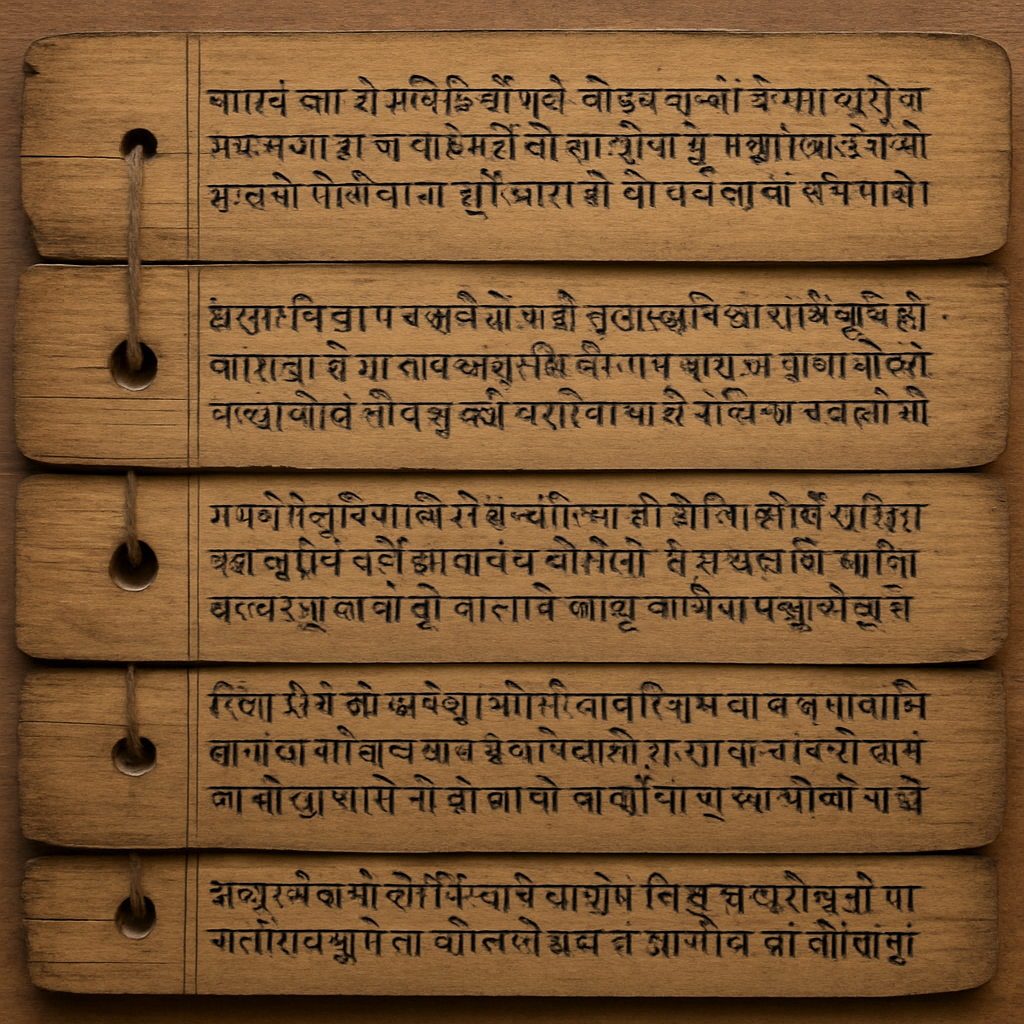
If we want to understand the definitive, classical definition of the practice, we must turn to the sage Maharishi Patanjali, who compiled the Yoga Sutras around 200 CE. Patanjali systemized the practice into an eight-limbed path (Ashtanga) and gave us what is widely considered the most authoritative description of the discipline.
In the second verse of the first chapter of the Yoga Sutras (Sutra 1.2), Patanjali provides the ultimate Patanjali yoga sutras definition:
“Yogas chitta vritti nirodhah.”
How to Interpret Chitta Vritti Nirodha
For a modern practitioner, knowing how to interpret chitta vritti nirodha is the key to unlocking the mental benefits of the practice. Let’s break down the Sanskrit:
- Chitta: The mind, consciousness, or the storehouse of memories and thoughts.
- Vritti: The fluctuations, modifications, or “whirlpools” of thought.
- Nirodhah: The cessation, stilling, or quieting.
Therefore, Patanjali’s sanskrit definition of yoga translates to: Yoga is the cessation of the fluctuations of the mind.
Patanjali is telling us that yoga is not about how deep you can bend or how long you can hold a handstand. It is the practice of calming the relentless chatter of the brain. When the “vrittis” (fluctuations) are stilled, the true self can finally be seen clearly, unclouded by anxiety, memory, or ego. This text lays out the ultimate blueprint for achieving mental clarity through yogic principles.
Yogic Philosophy in the Bhagavad Gita
While Patanjali focused heavily on the mechanics of the mind, another monumental text, the Bhagavad Gita, offers a highly practical and expansive definition of the practice.
The yogic philosophy in the bhagavad gita, spoken by Lord Krishna to the warrior Arjuna on a battlefield, presents yoga as a way of life rather than just a seated meditation. Krishna provides three defining statements about what yoga truly means:
- Samatvam Yoga Uchyate (Equanimity is called Yoga): Krishna teaches that yoga is the balance of the mind in all situations—remaining steady in success and failure, pleasure and pain, victory and defeat.
- Yoga Karmasu Kaushalam (Yoga is skill in action): This definition emphasizes acting in the world with full awareness and dedication, but without being attached to the outcome or rewards of the action.
- Duhkha Samyoga Viyogam Yoga Sangnitam (Yoga is the breaking of contact with pain): The Gita describes the practice as the severance of the union with suffering, allowing the practitioner to rest in enduring joy.
In the Gita, the practice is categorized into different paths to suit varying human temperaments, including Karma Yoga (the path of selfless action), Bhakti Yoga (the path of devotion), and Jnana Yoga (the path of knowledge).
Understanding Different Paths: Hatha vs. Raja Yoga
As the tradition evolved, different schools of thought emerged. A common point of confusion for modern practitioners is the difference between hatha and raja yoga philosophy. Understanding this distinction is vital for grasping the full spectrum of the tradition.
Raja Yoga: The Royal Path
Raja Yoga is often referred to as the “Royal Path.” It is the system outlined by Patanjali in the Yoga Sutras. Raja yoga is heavily focused on the mind and meditation. The physical postures (asanas) make up only a tiny fraction of this system (specifically, just one of the eight limbs). The ultimate goal here is mental mastery, concentration (Dharana), and deep meditative absorption (Samadhi).
Hatha Yoga: The Path of Force
Developed much later (around the 11th century CE), Hatha Yoga is the foundation of almost all modern physical yoga classes. In Sanskrit, “Ha” means sun and “Tha” means moon, representing the balancing of opposing energies in the body. Hatha yoga utilizes physical postures, breathwork (Pranayama), and energetic locks (Bandhas) to purify the physical body.
The critical difference? Hatha yoga was initially designed as a stepping stone. The intense physical purification of Hatha was meant to prepare the body so that the practitioner could sit comfortably for hours in meditation, eventually leading to the mental states required in Raja yoga. Today, however, many people practice Hatha solely for physical fitness, forgetting its role as a precursor to mental and spiritual awakening.
Why is the Sanskrit Meaning of Yoga Important for Your Practice?
You might be wondering: why is the sanskrit meaning of yoga important if I just want to stretch my back and relieve some stress?
When you understand the profound etymology and the philosophical weight behind the word, your practice shifts from a superficial workout to a deeply transformative “work-in.” Incorporating the original intentions of the ancient sages can profoundly impact your daily life.
Here are a few actionable ways to apply this deeper understanding to your everyday routine:
- Set an Intention Before You Move: Before your next class, remind yourself of the meaning of yuj in sanskrit. Actively try to “yoke” or tie your breath to your movement. Do not let your body do one thing while your mind plans your grocery list.
- Practice Equanimity Off the Mat: Channel the wisdom of the Bhagavad Gita. When you encounter a stressful email or a difficult conversation, try to practice Samatvam (equanimity). Keep your mind steady in the face of turbulence.
- Prioritize Mental Clarity over Physical Flexibility: Remember Patanjali’s teachings. The goal is calming the mind (chitta vritti nirodha). If you are pushing your body into painful poses out of ego, you are creating mental turbulence, which is the exact opposite of yoga.
- Embrace Stillness: At the end of a physical practice, do not skip Savasana (Corpse Pose). This period of physical stillness is where the union of the mind, body, and spirit takes place. It is the time when you are actively conditioning your nervous system to rest in a state of peaceful awareness.
Final Thoughts: Living the Yoga Meaning
To summarize, asking “what is yoga?” yields an answer far more profound than a series of physical stretches. From its earliest appearances in Vedic chariots to Patanjali’s precise psychological frameworks, the sanskrit definition of yoga has always pointed toward a state of unity, balance, and profound peace.
By understanding the yoga meaning through its historical roots, you empower yourself to experience the practice in its totality. Whether you are yoking the mind and body during a vinyasa flow, achieving mental clarity through yogic principles at your office desk, or striving for the highest union of individual soul and universal consciousness in meditation, you are participating in a sacred, millennia-old tradition.
The next time you step onto your mat, remember the true definition of yoga. Take a deep breath, quiet the fluctuations of your mind, and allow the profound union to unfold.