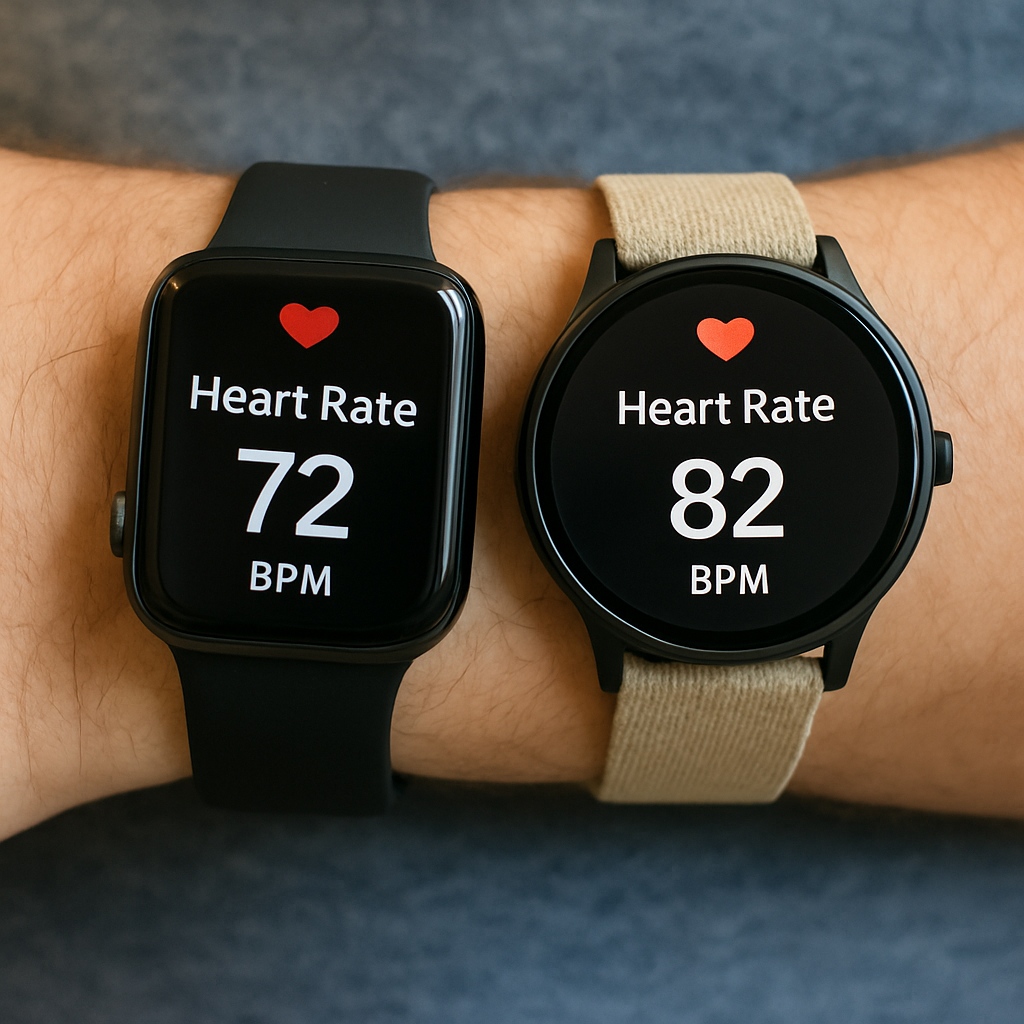
You are halfway through a grueling sprint, gasping for air, but your smartwatch insists your pulse is a peaceful 65 BPM. According to fitness industry data, this disconnect often stems from “cadence lock,” a frustrating glitch where watches accidentally count your rhythmic arm swings instead of your actual heartbeats.
Think about how hard it is to take a clear photo while running. Your device faces the exact same struggle trying to read your pulse using PPG (photoplethysmography sensors)—those flashing green lights on the back. Much like shining a flashlight through your finger to see blood flow, these optical sensors estimate volume changes. This light-based approach is fundamentally less direct than the electrical signals measured by a traditional chest strap.
Because optical sensors rely on seeing through your skin, variables like heavy sweat or a loose strap can quickly scramble the data. Finding the most accurate heart rate monitor watch requires looking beyond basic marketing for clinical validation. This independent medical testing proves the hardware actually performs, moving your daily health data from guessing to knowing.
You deserve absolute confidence in your metrics. The top five wearables for 2026 consistently deliver reliable, trustworthy numbers when you need them most.
The Green Light Secret: How Your Watch Sees Your Blood Flow
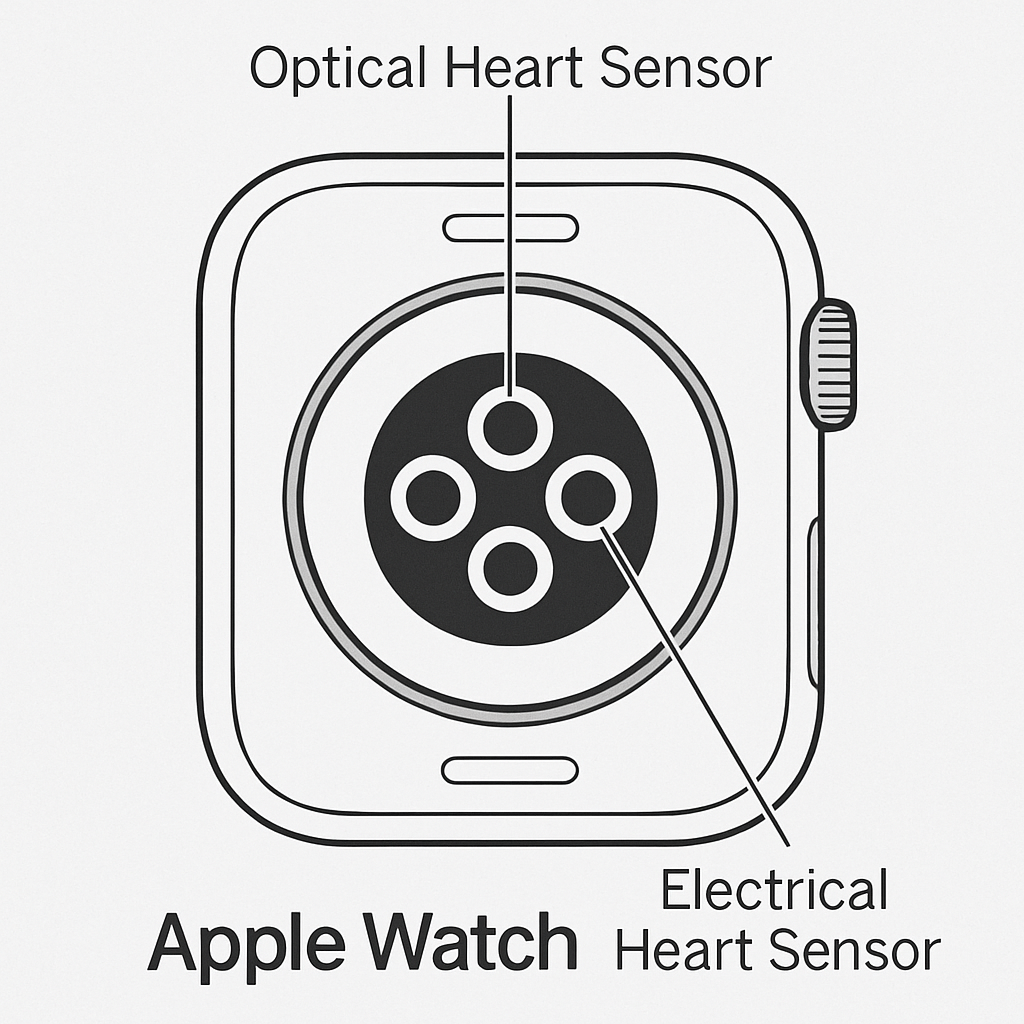
Peek under your smartwatch, and you will see a flashing green light. This acts like a tiny flashlight shining through your skin. Photoplethysmography sensors measure blood flow by treating your blood like a sponge that absorbs green light. Every time your heart beats, a larger volume of blood rushes into your wrist, absorbing more of that light.
Human bodies present unique challenges to this process. The impact of skin tone on optical sensor precision is a very real variable; darker skin naturally absorbs extra green light, while heavy wrist tattoos can block the signal entirely. Manufacturers solve this using multi-channel sensors. By adding extra LEDs to the back of the watch, the device gathers several angles of your pulse, actively filtering out errors caused by your physiology or a bumpy run.
Ultimately, optical monitors make educated guesses compared to reading raw electrical heart signals. The gap between electrode-based vs light-based pulse detection explains why brands invest heavily in advanced hardware to close that distance. This relentless push for accuracy establishes the Apple Watch Series 9 and Ultra 2 as the gold standard.
The Gold Standard: Why the Apple Watch Series 9 and Ultra 2 Lead the Pack
When running for the bus, your arm movement creates “noise” that confuses most sensors. Apple solves this by pairing dense LEDs with a highly tuned algorithm. This combination filters out the chaos of daily life, making Apple the everyday benchmark for wrist accuracy.
Beyond those flashing green lights, newer models hide a superpower in the digital crown: an Electrocardiogram (ECG) sensor. While standard optical sensors track your workout intensity, the ECG actively measures your heart’s raw electrical signals. This hardware is crucial for detecting atrial fibrillation with wearable devices, offering genuine peace of mind.
Consider these medical EKG benchmarks for wearable health technology:
- The Source: A hospital EKG uses 12 chest patches; the watch uses a single lead on your wrist.
- The Purpose: Medical EKGs diagnose complex diseases; your watch acts purely as an early warning system.
- The Result: You get shareable data for your doctor, though it never replaces professional care.
While Apple dominates everyday health monitoring, athletes pushing extreme limits need specialized tracking. This makes Garmin’s multi-channel edge the definitive choice for serious training.
Garmin’s Multi-Channel Edge: Why the Elevate Gen 5 Sensor Wins for Athletes
Stepping outside for a winter run often makes standard sensors go blind. Since cold weather restricts surface blood flow, Garmin tackles this problem in the Epix and Fenix 7 Pro using “spatial diversity.” By spreading six LEDs across the back of the watch instead of the usual two, it reads your pulse from multiple angles to catch faint signals. This hardware advantage often decides the Garmin vs Apple Watch heart rate comparison for dedicated outdoor athletes.
The transition to the Elevate Gen 5 sensor brings crucial reliability upgrades:
- Gen 4: Relied on fewer LEDs, which occasionally lost connection during heavy arm vibrations or chilly winds.
- Gen 5: Deploys a six-channel array, ensuring that if movement causes one light to miss your pulse, five others instantly cover the gap.
Beyond grueling workouts, this hardware makes Garmin the best fitness tracker for cardiovascular health monitoring overnight. It excels at measuring heart rate variability for recovery—tracking the microscopic time gaps between heartbeats to determine if your body is rested or overtrained. Yet, adding more lights isn’t the only way to find a clear pulse. The Google Pixel Watch 2 leverages Fitbit’s AI to solve the exact same issue.
The Sleeper Hit: How Google Pixel Watch 2 Leverages Fitbit’s AI
While some brands rely solely on bulky hardware, the Google Pixel Watch 2 combines Fitbit’s legacy with clever software. It utilizes a “multi-path” sensor, which functions perfectly like a security system using several cameras to cover blind spots. If heavy sweat or a loose strap blocks one optical light from clearly seeing your blood flow, an alternate path instantly picks up the slack to keep your data flowing.
Multiple viewpoints aren’t enough if you are swinging your arms while running for the bus. That erratic movement creates signal noise, much like trying to hear a whisper in a crowded, noisy room. To fix this, Google uses an AI algorithm to actively filter out your motion interference in real-time. This digital noise-cancellation consistently helps rank it as the most accurate hr monitor watch for anyone outside the Apple ecosystem.
Getting reliable android watch heart rate data used to mean sacrificing convenient daily smartwatch features. Now, everyday health enthusiasts seeking the best wrist heart rate tracker have a clear, comfortable winner. But for purists who ignore smart apps and just want raw, dedicated training data, Polar’s Precision Prime is the ultimate tool.
Polar’s Precision Prime: The ‘Pro’ Choice for Heart Rate Purity
Prioritizing data purity over smart notifications pushes you into sports science territory. Researchers consistently use Polar as their control device because it focuses exclusively on raw physiological data rather than apps. For everyday users seeking the gold standard for athletic performance tracking, Polar’s “Precision Prime” technology is the definitive answer.
Instead of relying just on AI software, this system solves erratic movement problems through sheer hardware force. It powers the most accurate wrist heart rate monitor by deploying a massive 10-LED array designed specifically for movement rejection:
- 5 Green LEDs: Capture standard pulse data near the skin’s surface.
- 4 Red LEDs: Scan deeper blood vessels, preventing data drops when your wrist muscles flex.
- 1 Orange LED: Adapts light penetration for different skin tones.
This uncompromising physical setup creates the best hrm watch for purists wanting dependable metrics during heavy gym sessions. But reliable accuracy doesn’t always require a premium price tag. The Coros Pace 3 proves that lightweight design can easily rival expensive hardware.
The Budget Champion: How Coros Pace 3 Beats Expensive Rivals Through Lightweight Design
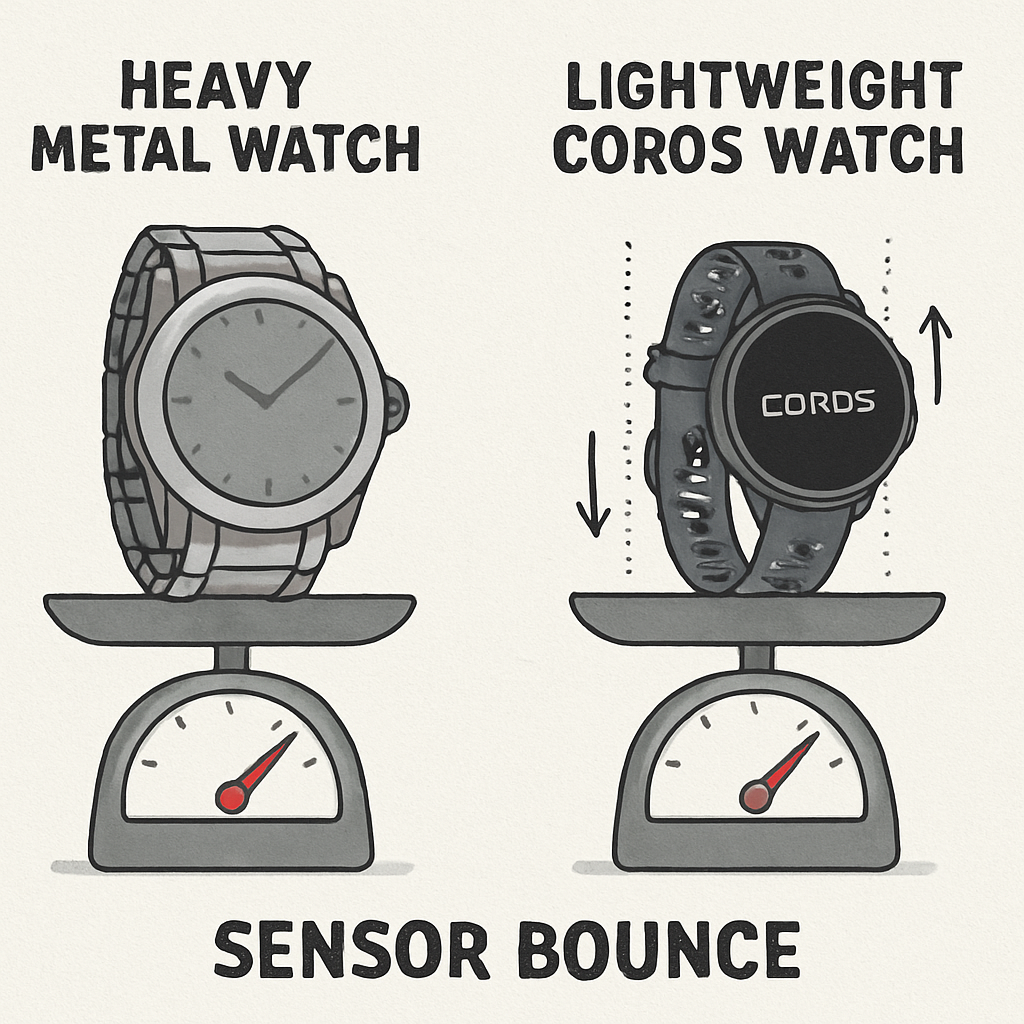
Paying $800 for a chunky smartwatch doesn’t guarantee flawless data; in fact, extra mass is actually among the leading reasons for erratic wrist heart rate readings. During high-impact exercise, heavy devices physically shift on your arm, creating a gap between the optical light and your skin known as “sensor bounce.”
This shifting triggers the frustrating cadence lock glitch mentioned earlier. Because the watch bounces with every stride, the confused sensor starts recording your running cadence—your steps per minute—instead of your actual pulse. If an easy jog suddenly displays a terrifying 170 BPM, the watch is simply counting your feet hitting the pavement. Therefore, the most accurate heart rate watch for runners is often just the lightest one.
That simple physics lesson explains why the $230 Coros Pace 3 consistently outperforms luxury models. Its featherlight body clings to your arm, completely preventing bounce and making it the best fitness tracker for cardiovascular health monitoring on a tight budget. If you already own a device, a few simple adjustments can immediately improve its accuracy.
3 Pro Tips to Make Your Watch More Accurate Tonight
Frustrated by erratic readings? Learning how to wear a smartwatch for better data often solves the problem instantly. Follow this pre-workout checklist:
- Apply the “Two-Finger Rule”: place the device two finger-widths above your wrist bone.
- Tighten the strap snugly, eliminating any gaps.
- Wipe the sensor glass clean of dried sweat.
Even with perfect placement, devices often lag when you suddenly sprint. This happens because cold arms lack perfusion—the steady flow of blood near your skin’s surface. Pumping your arms during a five-minute warm-up pushes blood into your extremities, drastically improving optical sensor accuracy during high intensity intervals.
Trusting your screen means you can finally rely on your calorie and recovery scores. Whether your goal is pacing a 5K or understanding heart rate zones for fat loss, reliable tracking is the foundation. With flawless technique, the final step is matching the right device to your personal goals.
Your 2026 Heart Rate Decision Matrix
Finding the most accurate heart rate monitor watch isn’t about deciphering confusing spec sheets; it’s about matching the technology to your lifestyle, budget, and smartphone. Whether you are the Health-Conscious iPhone User, the Performance Athlete, or the Value-Hunter, your ideal device is out there.
Comparing a chest strap to a wrist heart rate monitor helps you distinguish between data that is just “good enough” and clinically validated insights. Choosing the best wrist heart rate tracker for your specific routine gives you true confidence in your data, finally eliminating the frustration of dropped signals.
Start by wearing your device consistently to establish your baseline and observe how your body responds to daily stress. While no wrist-based sensor is completely flawless, these devices offer a powerful window into your well-being. Share this data with your healthcare provider to enrich your medical profiles, using wearables as the ultimate early warni