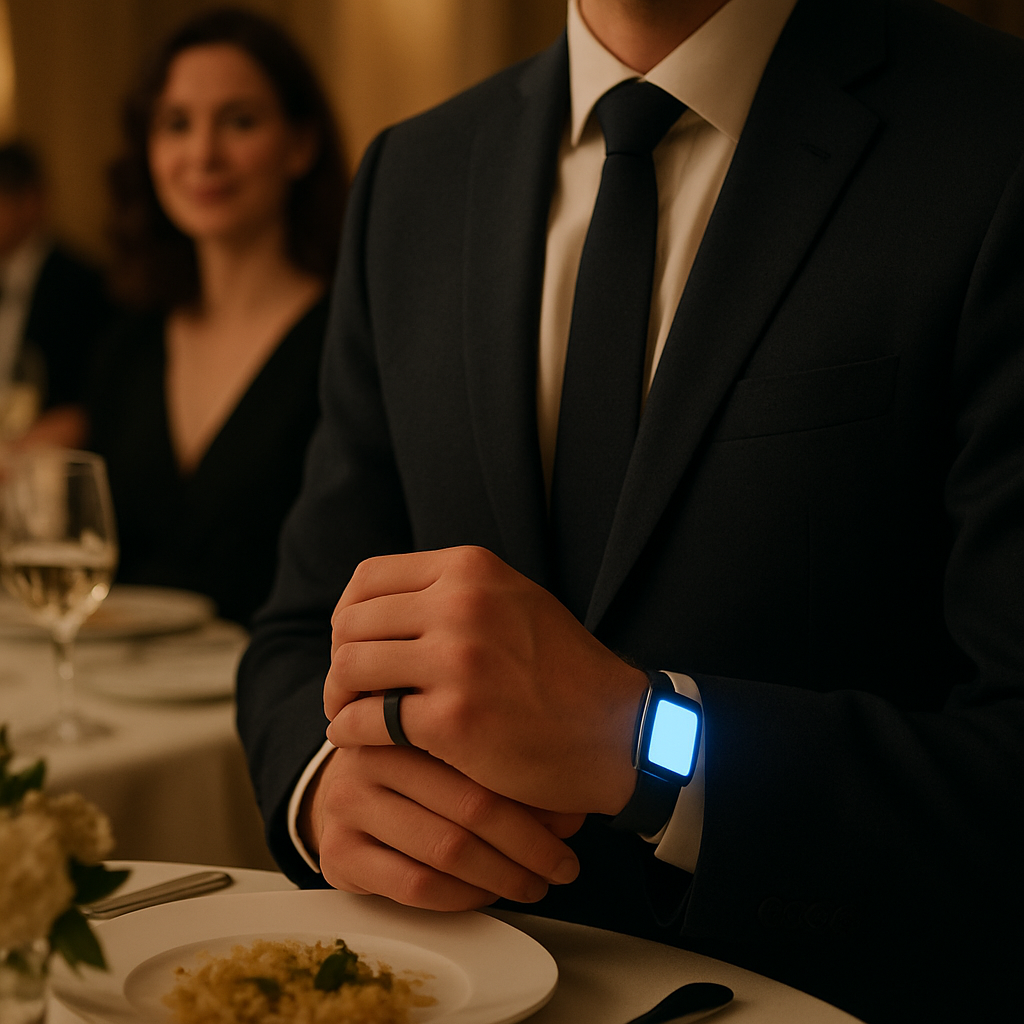
Imagine sitting at a candlelight dinner party, only to have your wrist suddenly light up and buzz with an email alert. While traditional smartwatches are excellent at delivering these active notifications, that constant digital tapping easily becomes exhausting. You want health insights to improve your well-being, but a glowing screen shouldn’t interrupt your evening or clash with your formal attire.
Finding a monitor comfortable enough for overnight use poses another challenge, especially when bulky glass digs into your skin. Fortunately, the industry now offers sleek fitness trackers that are not watches, built specifically to eliminate this physical friction. These stealthy aesthetics make them perfect fitness trackers for people who hate watches, seamlessly shifting the technology into discreet rings or soft chest straps.
Think of these screenless wearable devices through the “invisibility analogy”—acting like your car’s internal sensors to become silent partners in the background. By relying on passive tracking, they quietly gather vital metrics without demanding immediate attention. According to user behavior studies, this comfortable, set-it-and-forget-it convenience directly leads to higher long-term consistency.
Smart Rings: How a Tiny Band Tracks Sleep Better Than a Watch
Trying to sleep with a bulky, glowing smartwatch is a common frustration, which is why many people are turning to smart rings for activity tracking. These tiny bands act as silent partners in your routine. The ring quietly gathers your daily information, while your smartphone acts as the connected hub that translates those numbers into a morning wellness score you can actually understand.
Moving technology from the wrist to the finger actually improves accuracy. The palm side of your finger has blood vessels right near the surface, creating an ideal environment for finger-based PPG sensors—tiny lights that measure your blood flow. Because a ring fits snugly and doesn’t slide around on a joint, these biometric data collection sensors get a remarkably clear, uninterrupted picture of your vitals.
This consistently tight fit allows rings to expertly capture three specific nighttime metrics better than most watches:
- HRV (Heart Rate Variability): The changing amount of time between your heartbeats, which reveals how stressed or recovered your body feels.
- Finger Temperature: Subtle heat changes that can often predict an incoming illness before you even feel sick.
- Respiratory Rate: Your exact breathing speed while resting.
Without a screen to drain power, these health trackers easily manage multi-day battery life on a single charge. If you prefer keeping your hands completely bare, however, other discreet options exist.
Screenless Wristbands: Why Less Distraction Leads to Better Recovery
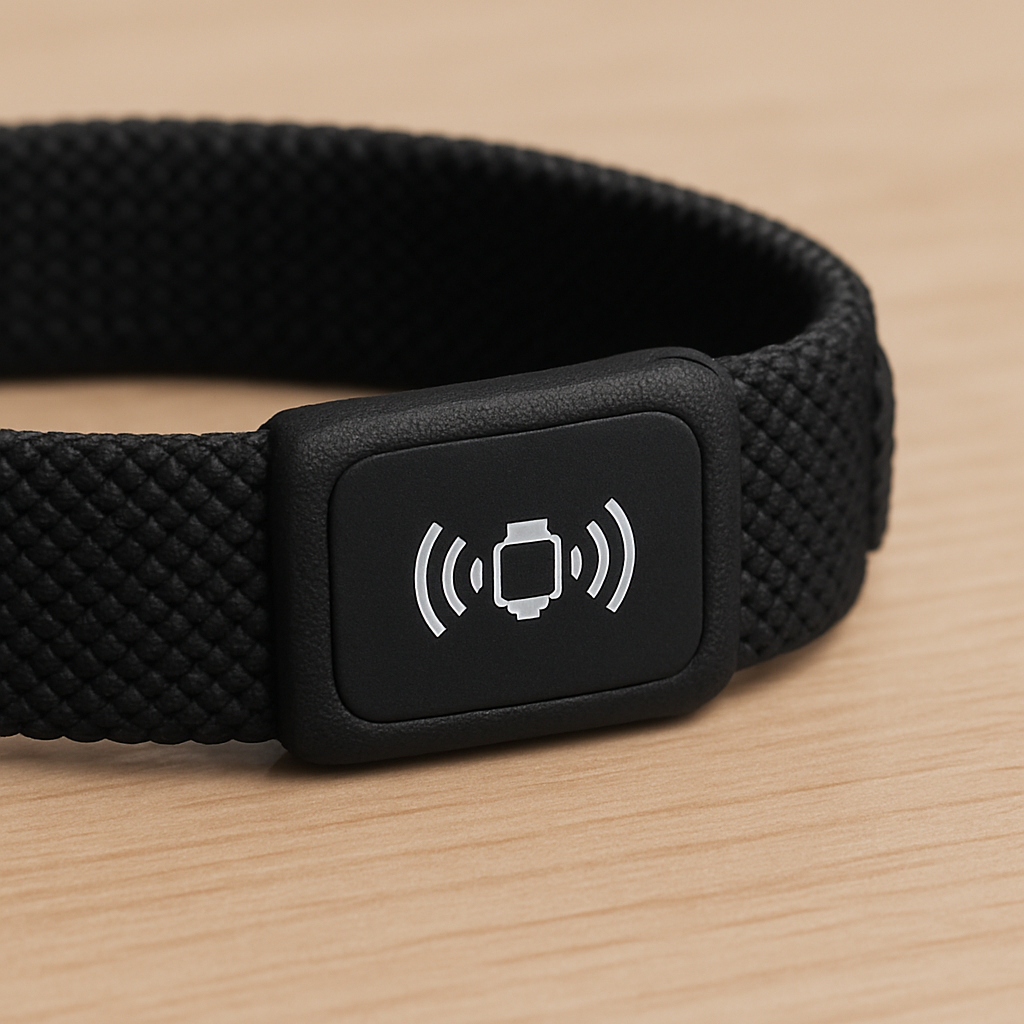
Constant alerts from a smartwatch can quickly turn a helpful health tool into a source of anxiety. If you want to escape notification fatigue, screenless wearable health monitors offer a much-needed psychological break. Devices wrapped in comfortable fabric remove the digital display entirely, allowing you to focus on your actual life rather than a glowing screen on your wrist.
Missing the display doesn’t mean missing important nudges, thanks to haptic feedback notifications. This technology uses gentle vibrations against your skin to communicate, acting like a quiet tap on the shoulder rather than a loud shout across the room. You can even use these fitness bands for silent morning alarms, waking up smoothly without disturbing a sleeping partner.
Behind the scenes, the device’s companion app translates your daily effort and sleep into “Strain” and “Recovery” metrics. This system, originally designed to generate recovery scores for athletes, perfectly helps everyday users understand when to push hard or take a rest day. While these bands expertly track your overall daily readiness, you might need something closer to the heart for tracking intense gym sessions.
Chest Straps: Getting Pro-Level Accuracy for High-Intensity Workouts
If you’ve ever felt your heart pounding during a sprint but your smartwatch read only 90 beats per minute, you’ve hit the limits of wrist tracking. Standard watches rely on optical biometric data collection sensors, shining light through your moving arm to guess your pulse based on blood flow. A chest strap, however, uses EKG (electrocardiogram) technology. Because it sits right over your heart, it directly listens to the electrical “thump” of each beat, acting as a direct wire to your cardiovascular system rather than relying on wrist-based guesswork.
This proximity also prevents “cadence lock,” a frustrating glitch where wrist-bound fitness gadgets confuse your arm swinging with your actual pulse, accidentally counting running steps as heartbeats. Furthermore, you can sync heart rate monitoring chest straps for gym workouts directly to your phone’s health app. Your phone stays tucked away in your pocket as the “brain,” allowing you to enjoy a highly accurate, completely screen-free exercise session.
While casual jogging might not require this intense precision, standard wrist optical sensors struggle with extreme arm movements. A chest strap becomes mandatory for accuracy during these four activities:
- HIIT: Where your pulse spikes faster than a watch can detect.
- Weightlifting: Where gripping a barbell restricts wrist blood flow.
- Boxing: Where wearing a watch under gloves is a safety hazard.
- Rowing: Where constant arm flexing disrupts light sensors.
Once you finish sweating, you might want a discreet way to log your daily movement throughout the rest of your day.
Clip-Ons and Smart Fabric: Tracking Steps Without Anything on Your Arm
Dressing for a boardroom or wedding often means leaving your rubber sports band behind. For those seeking discreet activity tracking for formal events, clip-on devices and smart jewelry offer a stylish compromise. Brands like Bellabeat disguise their trackers as elegant necklaces or leaf-shaped brooches, creating ideal fitness trackers for people who hate watches clashing with their wardrobe.
Beyond aesthetics, relocating the sensor actually improves how well it records your daily strides. When deciding where to wear a clip-on fitness tracker, the hip or waistband is the absolute gold standard. Wrist-based step counters easily get fooled when you fold laundry or talk with your hands. Because your core carries your body weight, a hip-mounted sensor captures the true, rhythmic bounce of your walk, acting as a highly accurate pedometer that ignores random arm movements.
The ultimate evolution of this invisible technology is “smart fabric,” which weaves microscopic sensors directly into your workout gear. Your clothing measures your movement through the stretch of the material itself, eliminating bulky gadgets entirely. With options ranging from elegant brooches to intelligent shirts, selecting the right form factor depends on matching the technology to your lifestyle.
The Three-Step Filter for Choosing Your Non-Watch Device
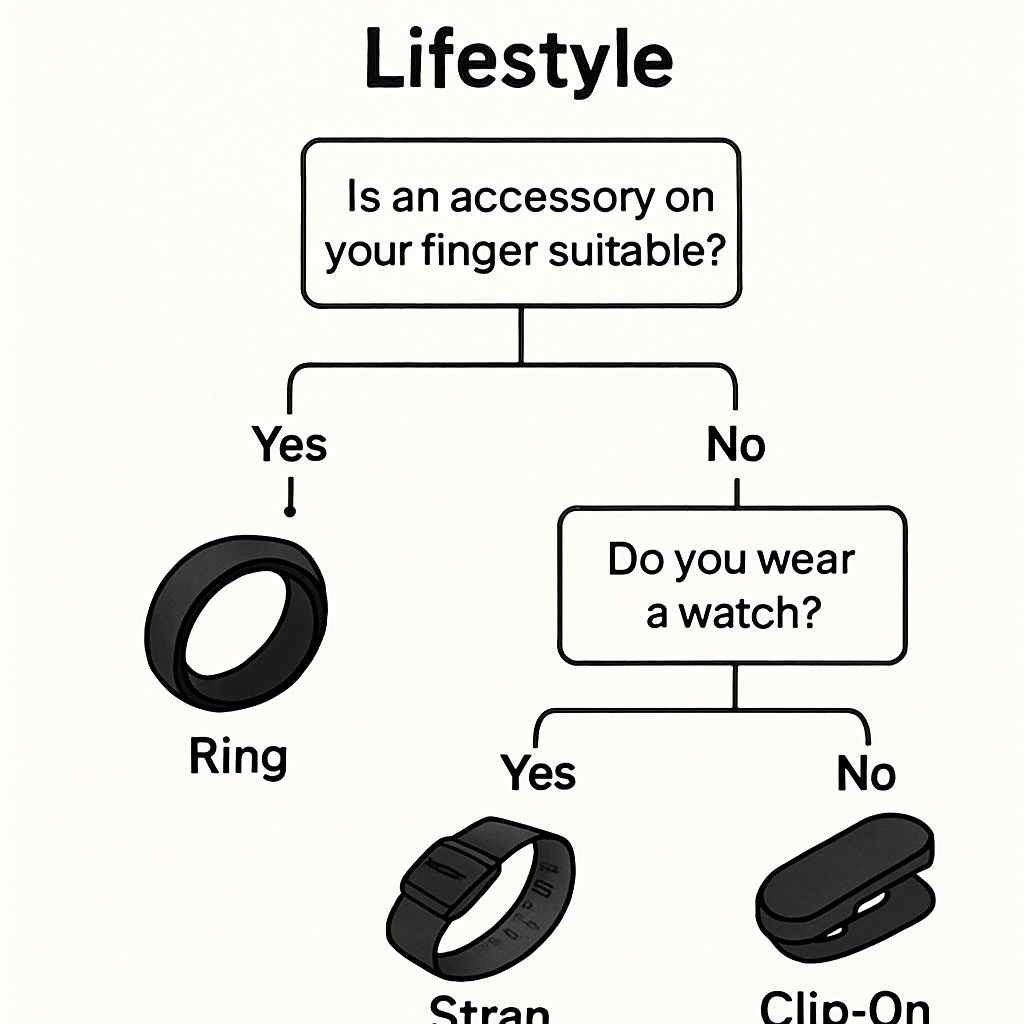
You don’t need a medical degree to navigate the wearable market; you just need a lifestyle-first filter. When choosing a non-wrist based fitness device, avoid paying for features that clash with your daily routine. Instead of asking which gadget has the most sensors, ask what you are actually willing to wear every single day.
Understanding the “battery-to-biometric ratio” prevents frustrating buyer’s remorse. Smaller wearables offer incredible discretion, but physics demands a compromise. A sleek smart ring needs charging every few days, whereas a basic hip clip tracks steps for months on a single watch battery. If you hate daily charging rituals, you must weigh your desire for deep health data against simple battery longevity.
To find the best alternatives to apple watch for fitness, match your specific health goal to the correct form factor:
- Sleep Priority: Opt for a ring. It is comfortable, and regarding smart ring vs wristband accuracy, the finger provides highly reliable overnight signals without the distraction of a glowing screen.
- Gym Priority: Choose a chest strap for intense workouts requiring precise, real-time heart tracking directly from the source.
- 24/7 Aesthetic Priority: Use stylish clip-ons or brooches that completely hide your daily movement data.
Securing the perfect match guarantees your tracker becomes a seamless companion rather than abandoned tech.
How to Turn Your New ‘Invisible’ Data into Daily Wins
You no longer have to compromise your personal style to monitor your wellness. By understanding how to track steps without wearing a watch, you have unlocked a more natural, invisible way to gather personal data. These screenless health trackers are simply the “eyes” quietly observing your body’s signals, while your smartphone acts as the “brain” that translates those raw numbers into clear, actionable insights.
To bridge the gap between collecting data and actually improving your habits, start with a seven-day observation period. Wear your new device continuously for a full week without changing your normal routine just to establish a baseline. Simultaneously, build a charging habit into a daily activity—like docking the sensor while you shower—to guarantee 24/7 coverage without frustrating data gaps.
As you settle into this seamless routine, you will realize the true power of these modern fitness gadgets. Instead of constantly demanding your attention with buzzing alerts, they quietly empower you to make informed lifestyle choices on your own terms. Your journey to better health no longer requires a distracting screen; it just requires a silent partner.