Yoga Instructors
When you walk into a studio, you are trusting your physical safety to the person at the front of the room. But how do you know if a yoga instructor actually has the training to keep your joints protected? According to industry experts, the yoga world operates much like the wild west, where anyone can technically claim to be a teacher without breaking the law.
Unlike massage therapists or physical therapists with government-issued credentials, yoga is entirely self-regulated. Think of the difference between a state-mandated driver’s license and a private participation certificate. A certificate simply means someone finished a specific private program, not that a legal regulatory body evaluated their qualifications. This reality makes evaluating true eligibility for yoga teacher roles crucial for both curious students and aspiring professionals.
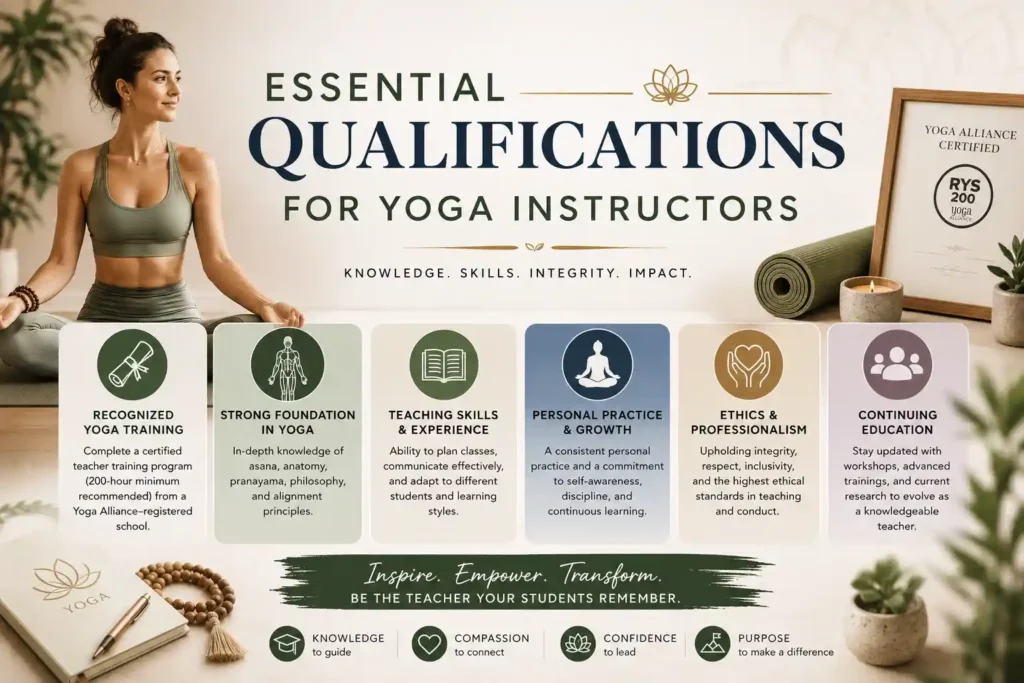
Fortunately, a recognized baseline exists to help navigate this unregulated space. If you are researching how to become certified—or just want to vet your local studio—the journey starts with a 200-hour training program. This foundational benchmark provides the essential anatomy and practical teaching skills needed to guide students safely.
A strong knowledge of various Yoga Styles is essential for instructors who want to teach diverse student groups and create well-rounded yoga programs.
The 200-Hour Benchmark: Why It’s the ‘High School Diploma’ of Yoga Teaching
Turning your love for yoga into a career is exciting, but the path begins with one foundational step. The industry baseline for entry-level employment is the RYT 200—a Registered Yoga Teacher with 200 hours of training. Think of this credential as the “high school diploma” of the yoga world; it proves a teacher has the essential skills to guide a safe, accessible class.
While searching for local programs, you might wonder how that massive block of time is actually spent. Programs divide the workload into “contact hours” (real-time instruction with direct feedback from a lead teacher) and “non-contact hours” (independent homework and reading). This structure ensures that as you learn to teach, you aren’t just memorizing a textbook—you are actively guided by a seasoned professional.
Meeting the standard 200-hour requirements means diving into a very specific curriculum. Every quality program builds its foundation on these five core pillars:
- Asana practice: Mastering the physical poses and safe alignment.
- Anatomy: Grasping basic body mechanics to prevent common student injuries.
- Philosophy: Studying the history, ethics, and mental focus techniques.
- Teaching Methodology: Learning class pacing, voice projection, and clear communication.
- Practicum: The hands-on experience of actually teaching a full class to your peers.
Surviving that final practicum transforms a dedicated student into a confident instructor. Once finished, a graduate possesses the tools to lead effectively. Knowing who tracks these credentials globally is the next step in understanding what being a “registered” teacher really means.
Navigating the Yoga Alliance: What Being a ‘Registered’ Teacher Really Means
When you finish your 200-hour program, your specific school hands you a certificate, but the Yoga Alliance tracks it globally. Think of this organization like a Better Business Bureau for yoga rather than a government licensing board. Because the industry is entirely self-regulated, there are no legal accreditation standards. Instead, they operate as a voluntary registry that sets baseline curriculum guidelines to keep students safe.
Paying the annual fee to join this registry earns you the Registered Yoga Teacher (RYT) title. For many new instructors, this stamp of approval serves as the expected qualification for jobs at local studios and gyms. While not legally mandatory to teach, maintaining your registration offers several practical advantages:
- Credibility: Instant professional recognition from employers and students.
- Insurance access: Easier approval and discounts for liability coverage.
- Directory listing: A public profile where anyone can verify your status online.
- Continuing education access: Exclusive workshops to keep your teaching skills sharp.
Earning that first 200-hour badge and getting registered is a massive achievement, but it is often just the beginning. Once you master the basics, the next logical step is expanding your expertise: moving from foundational training to specialized certifications.
Expanding Your Expertise: Moving from RYT 200 to 500-Hour and Specialized Certifications
| Credential Level | Training Hours Required | | :— | :— | | RYT 200 | 200 Foundational Hours | | RYT 500 | 200 Hours + 300-Hour Bridge |
Finishing your foundational training opens the door to teaching, but many instructors eventually want to deepen their practice. To reach the next level, teachers take a 300-hour bridge course. When combined with their initial certificate, this completes a comprehensive 500-hour training, equipping them to handle advanced poses and complex student needs.
Classroom hours only tell part of the professional story. The Experienced Registered Yoga Teacher (E-RYT) designation highlights actual teaching experience. To earn that title, a 200-hour teacher must log at least 1,000 hours of real-world teaching over two years. This distinction helps studios and students quickly identify veteran instructors.
Specializing is another popular career move that helps teachers stand out. Exploring specific niches requires extra education to ensure safety across these different levels:
- 200-Hour: The entry-level baseline.
- 300-Hour: The bridge to advanced mastery.
- 500-Hour: The highest standard for international teaching credentials.
- Specialty: Focused add-ons like kids or prenatal yoga. Notably, prenatal teaching prerequisites require an existing 200-hour certificate plus 85 additional hours of specialized maternal training.
Investing in these advanced certifications gives instructors the confidence to support diverse bodies in any setting. Whether a teacher pursues a 500-hour track or a prenatal niche, the core goal remains student well-being. This ongoing education naturally establishes the importance of anatomy, ethics, and philosophy for student safety.
Beyond the Mat: Why Anatomy, Ethics, and Philosophy are Essential for Safety
A safe practice relies heavily on an instructor’s knowledge of the human body. Knowledge of joint and muscle mechanics actively prevents injuries, which is why essential anatomy and physiology remain core training requirements. A qualified teacher knows exactly how to adapt standard poses to protect a student with a bad knee or a stiff lower back.
Beyond physical movements, studying yoga philosophy and ethical guidelines provides the professional framework for how classes operate. This isn’t just about cultivating a peaceful atmosphere or sharing inspiring quotes. At the heart of these teachings is Ahimsa, which translates to non-harming. In a modern studio setting, practicing Ahimsa guarantees a secure environment where students are never pushed past their personal limits or made to feel uncomfortable.
Translating these ideas into real-world skills takes place during observation hours and practicums. Here, trainees learn their professional scope of practice—acknowledging that they are yoga instructors, not doctors or physical therapists. Building this solid ethical and anatomical foundation naturally leads to the final non-negotiable safety requirements.
The Professional Checklist: Why CPR, Liability Insurance, and First Aid Are Non-Negotiable
Graduating from a 200-hour program is just the beginning of getting hired. Before leading a class, instructors must meet baseline safety standards, starting with current CPR and first aid certification. Maintaining these active credentials ensures a teacher can confidently handle sudden medical emergencies in the studio until healthcare professionals arrive.
Securing financial protection is equally crucial. Even cautious instructors carry professional liability insurance—often referred to as indemnity insurance—to protect themselves financially if a student gets injured during practice and claims the instructor was at fault. This coverage is surprisingly accessible, typically costing between $150 and $250 annually, and is universally required by legitimate gyms and studios before you can teach a single class.
Compiling these documents fulfills the standard hiring requirements studio managers expect to see. A complete professional portfolio ready for job applications should include your 200-hour Teaching Certificate, an active Liability Insurance Policy, a valid CPR/First Aid Card, and a Professional Resume.
With this professional checklist clear, the next step is actually earning that initial credential—leading directly into comparing training formats and costs.
Choosing Your Path: Comparing Costs, Legitimacy, and Online vs. In-Person Training
Deciding where to learn involves navigating vastly different price points and formats. A standard in-person 200-hour program usually costs between $2,500 and $3,500 domestically, while international destination retreats easily double that expense. Conversely, digital programs offer budget-friendly alternatives that sometimes drop below $500, but smartly comparing training costs requires looking at the actual value delivered rather than just the price tag.
The rise of digital education has forced studio managers to closely evaluate program legitimacy before hiring new instructors. As you weigh your options, consider these fundamental trade-offs:
- Cost & Flexibility: Asynchronous training (watching pre-recorded videos on your own schedule) is highly flexible and affordable, while in-person immersions demand fixed schedules and higher tuition.
- Feedback: Traditional studios provide real-time, hands-on corrections. Online courses rely on video submissions unless they feature hybrid learning—a format mixing independent study with live, synchronous video calls to offer immediate guidance.
- Community: In-person training naturally builds a local professional network, whereas digital programs must replicate this connection through virtual forums.
Protecting your investment means spotting low-quality “certification mills” before paying a deposit. Always ask three critical questions: Is the curriculum registered with an industry body? Will I receive live feedback on my teaching? Do local studios actually hire graduates from this specific program? Getting clear answers ensures your certificate holds real professional weight.
Your 4-Step Roadmap to Becoming a Qualified Yoga Instructor
You now have the tools to evaluate yoga instructor qualifications, whether you are simply checking your current teacher’s background for peace of mind or preparing to lead a room yourself.
If you want to become certified, follow this proven timeline:
- Pick a 200-hour YTT: Choose a foundational program that matches your goals.
- Get Certified: Finish your required coursework and teaching practice hours.
- Get Insured/CPR: Secure liability insurance and basic life-support training to protect everyone.
- Register with an Alliance: Join a registry and fulfill ongoing continuing education requirements to maintain your active status.
Earning that initial certificate is just the opening chapter. The safest, most inspiring teachers never stop being students. Take your first step confidently, knowing you have a clear roadmap to build a responsible and rewarding teaching practice.
Before selecting a certification program, it is helpful to explore the different Yoga Styles available, as each tradition offers unique teaching methods, philosophies, and benefits.