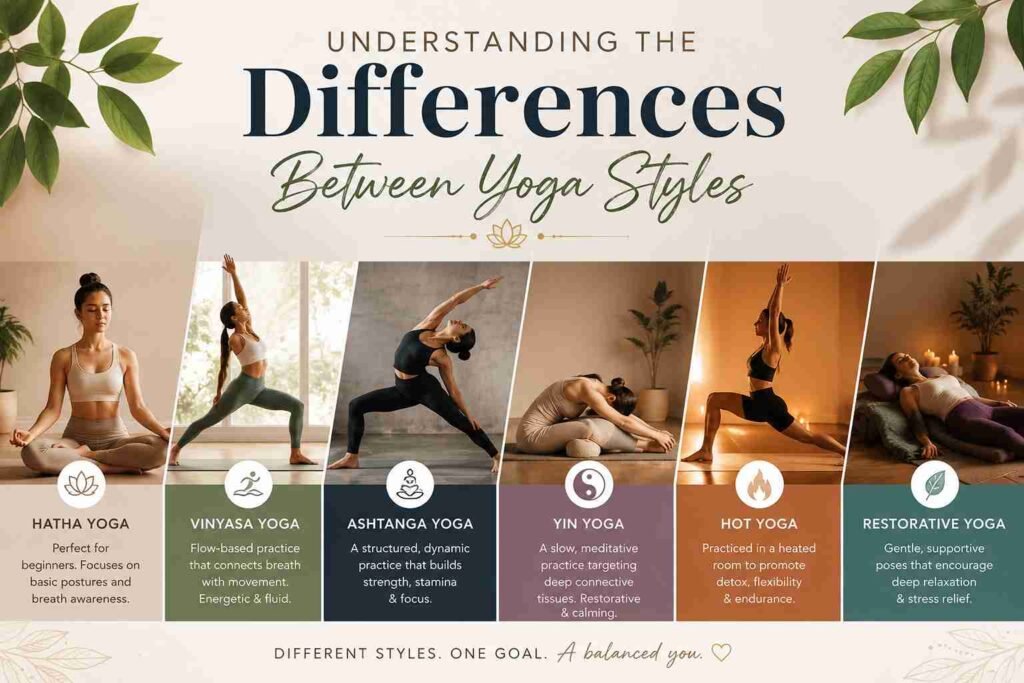
Yoga Styles
Yoga is a practice with deep roots and many branches. Each branch, or style, offers unique benefits and experiences.
Understanding these differences can help you find the right fit for your needs. Whether you’re a beginner or seasoned practitioner, exploring various Yoga styles can be enlightening.
From gentle Hatha to dynamic Vinyasa, each style has its own rhythm and focus. Some emphasize physical strength, while others nurture the mind and spirit.
Choosing the right yoga style can enhance your practice and personal growth. Let’s delve into the diverse world of yoga and types of yoga to discover what suits you best.
What Is Yoga? An Overview
Yoga is an ancient practice that harmonizes the body, mind, and spirit. Originating in India thousands of years ago, it’s become a global phenomenon today.
At its core, yoga involves physical postures, breathing techniques, and meditation. These elements work together to promote overall well-being and inner peace.
Yoga isn’t just about physical fitness; it’s also a path to mental clarity and spiritual growth. Different styles of yoga offer varied focus areas, from relaxation to intense physical activity.
Common elements found in yoga styles include:
- Asanas (postures)
- Pranayama (breath control)
- Dhyana (meditation)
Understanding these components helps practitioners connect deeply with their practice. While some seek physical benefits, others turn to yoga for its transformative and holistic effects.
Why Are There So Many Types of Yoga?
Yoga has evolved over centuries, adapting to different cultures and needs. This evolution has given rise to many distinct yoga styles. Each type emphasizes different aspects, catering to the diverse preferences of practitioners.
Various teachers have introduced unique techniques, creating new approaches within the practice. This diversity ensures that yoga can suit every individual’s journey and goals.
Several reasons for the variety in yoga styles include:
- Cultural influences
- Physical and mental benefits
- Personal preferences and goals
The range of yoga styles available today makes it a versatile and accessible practice for all.
Hatha Yoga vs Vinyasa Yoga: Key Differences
Hatha yoga and Vinyasa yoga are among the most popular types of yoga. However, they offer notably different experiences. Understanding their differences helps practitioners choose what suits their preferences and fitness levels best.
Hatha yoga is often a gentle introduction to yoga’s basic postures. It focuses on holding poses longer, allowing deep stretching and improved flexibility. Typically slower-paced, it emphasizes balance and alignment.
Vinyasa yoga, on the other hand, is dynamic and movement-intensive. It features continuous flow from one pose to another, linked by breath. This style is often considered more physically demanding due to its faster pace.
Key aspects of Hatha yoga include:
- Slow-paced movements
- Focus on pose alignment
- Longer holding of poses
In contrast, Vinyasa yoga highlights:
- Breath-synchronized movement
- Fluid transitions between poses
- Emphasis on cardiovascular benefits
Choosing between Hatha and Vinyasa depends on one’s personal goals. Consider whether you seek deep relaxation or an invigorating workout. Both styles provide physical and mental benefits but cater to different preferences.
by Jaspinder Singh (https://unsplash.com/@jaspindersingh)
Exploring Popular Yoga Styles
Yoga boasts a rich variety of styles, each with unique benefits. From gentle practices to intense workouts, there’s something for everyone. Understanding these popular styles helps in finding one that aligns perfectly with individual needs and preferences.
This section delves into several prominent yoga styles beyond the well-known Hatha and Vinyasa. Each style offers different experiences, whether you seek physical fitness, mental clarity, or spiritual awakening. By exploring the essence of each style, you can better decide which might be the right fit for your lifestyle.
Ashtanga Yoga
Ashtanga yoga is a rigorous, discipline-driven practice. It follows a specific sequence of postures, ideal for those who enjoy structure. This style requires dedication and discipline, often attracting driven individuals.
It is known for its consistency, with practitioners performing the same series of poses in every session. This repetitive nature allows for deep learning and improvement over time. Ashtanga not only builds strength and flexibility but also cultivates mental focus and endurance.
Bikram and Hot Yoga
Bikram yoga, commonly known as hot yoga, is performed in a heated room. This intense environment enhances flexibility and detoxification. Bikram follows a set sequence of 26 postures and is highly popular among those who enjoy a physically challenging workout.
Hot yoga encompasses classes in hot conditions but may vary in sequences. The heat aids in muscle pliability and provides cardiovascular benefits. Practitioners should stay hydrated and be mindful of their limits in such demanding conditions.
Iyengar Yoga
Iyengar yoga places strong emphasis on precision and alignment. It often uses props like blocks and straps to achieve proper posture. This style is beneficial for those focusing on posture perfection and body alignment.
Iyengar yoga is characterized by:
- Attention to detail
- Use of props
- Focus on posture alignment
Such attributes make it an excellent choice for beginners and those recovering from injuries. Practitioners can experience improved flexibility and muscle strength through controlled and precise movements.
Kundalini Yoga
Kundalini yoga centers on awakening energy through dynamic movements, breath work, and meditation. This holistic approach integrates spiritual and physical practices, aiming for inner transformation. Ideal for individuals seeking both physical benefits and spiritual enlightenment.
The practice often includes chanting, singing, and meditation, fostering a sense of deep connection with the self. Kundalini yoga challenges both the mind and body, suitable for those with an open heart and mind toward spiritual exploration.
Yin Yoga
Yin yoga targets deep connective tissues with long-held, passive poses. It offers a quiet, meditative approach to stretching. This style is perfect for those seeking relaxation and deeper flexibility.
With poses held for several minutes, practitioners experience enhanced joint health and mobility. Yin yoga is an excellent counter to more active styles and is especially beneficial for stress relief.
by Yuda Laurensius (https://unsplash.com/@yudalaurensius_)
Restorative Yoga
Restorative yoga is a deeply relaxing style focused on restful poses supported by props. It promotes overall relaxation and stress reduction, making it ideal for recovery and stress management.
The practice involves holding fewer poses for extended periods, encouraging mental relaxation and letting go of tension. Restorative yoga is perfect for those seeking calmness and rejuvenation in their practice, providing a gentle counterbalance to everyday stressors.
Power Yoga
Power yoga is a vigorous, fitness-based approach rooted in Vinyasa’s principles. It emphasizes strength, flexibility, and cardiovascular fitness. This dynamic style caters to those who enjoy intense, sweat-inducing workouts.
While it doesn’t follow a set sequence, Power yoga offers ample variety and keeps sessions invigorating. Ideal for those who appreciate a challenging, athletic practice, it bridges the gap between mind-body connection and physical exertion, perfect for improving overall fitness.
How to Choose the Right Yoga Style for You
Choosing the ideal yoga style depends on your personal goals and preferences. Consider what you hope to achieve through yoga. Are you focused on fitness, relaxation, or spiritual growth? Different styles cater to these varied goals.
Assess your current fitness level and any physical limitations. Some yoga styles are more suitable for beginners, while others may challenge seasoned practitioners. Trying different classes can provide valuable insights into what resonates with you most.
When selecting a yoga style, reflect on these factors:
- Personal goals (fitness, relaxation, spiritual)
- Physical condition and fitness level
- Preferences for pace and instruction style
Experiment with different styles to find one that aligns with your needs. Once you discover your perfect yoga match, the journey of practice can be highly rewarding and transformative.
by Jaspinder Singh (https://unsplash.com/@jaspindersingh)
Benefits of Exploring Various Yogas
Diving into different yoga styles can enhance your overall experience. Each style offers unique advantages that can improve physical and mental well-being. By experimenting, you can better tailor your practice to your needs and preferences.
Exploring a variety of yogas can:
- Improve flexibility and strength
- Enhance mental clarity and focus
- Provide different levels of physical challenge
- Offer insights into personal growth and awareness
The diversity of yoga styles ensures that there’s always something new to learn. This variety keeps your practice engaging and helps prevent boredom, fostering a lifelong journey of self-discovery.
Frequently Asked Questions About Yoga Styles
Many people have questions when starting their yoga journey. Here, we address some common queries to help guide you. Understanding the basics can make it easier to choose the right path.
Frequently Asked Questions:
- How do I know which style is best for me?
- Can beginners try advanced yoga styles?
- Is there a yoga style that combines physical and spiritual elements?
These questions highlight some of the common concerns that new and experienced practitioners may face. Addressing them can help make the decision process easier and more informed.
Conclusion: Embracing the Diversity of Yoga
Yoga offers a vast and diverse world of possibilities. Whether seeking physical challenge, mental clarity, or spiritual growth, there’s a yoga style for everyone.
Exploring these various yogas provides opportunities for personal enrichment and discovery. Embrace this diversity, and you’ll likely find a path that resonates deeply with your personal journey.